OMERO-Screen
An integrated pipeline for high-content image analysis, combining image data, metadata, and analysis workflows.
The Challenge: Integrating High-Content Image Analysis
Modern cell biology research generates vast amounts of imaging data, but managing this data alongside metadata and analysis results remains a significant challenge. We needed an end-to-end pipeline that could seamlessly integrate image acquisition, metadata management, and automated analysis workflows—all within a single, coherent system.
Why We Built OMERO-Screen
Traditional approaches to high-content screening often involve disconnected tools and manual data transfer between analysis stages. This fragmentation slows research, introduces errors, and makes it difficult to maintain reproducibility. OMERO-Screen addresses these challenges by creating a unified environment where images, metadata, and computational analysis coexist.
Our pipeline enables rapid development and deployment of new computational models, streamlined analysis of cyclic immunofluorescence data, and robust cell tracking across time-lapse experiments. By automating the connection between data generation and analysis, we can focus on biological questions rather than data management logistics.
Key Capabilities
OMERO-Screen provides a complete framework for high-content imaging workflows, with three primary applications driving our research:
- •Rapid Model Deployment: Quickly build, train, and deploy deep learning models for feature extraction directly on imaging data stored in OMERO.
- •Cyclic Immunofluorescence Analysis: Develop and execute complex analysis workflows for multiplexed imaging experiments with automated registration and channel alignment.
- •Cell Tracking Infrastructure: Set up productive cell tracking pipelines that link temporal information with cellular features across long-term live-cell imaging experiments.
System Architecture
The OMERO-Screen pipeline integrates multiple components to create a seamless workflow from image acquisition to analysis results. The architecture ensures that metadata, image data, and computational outputs remain connected throughout the analysis process.
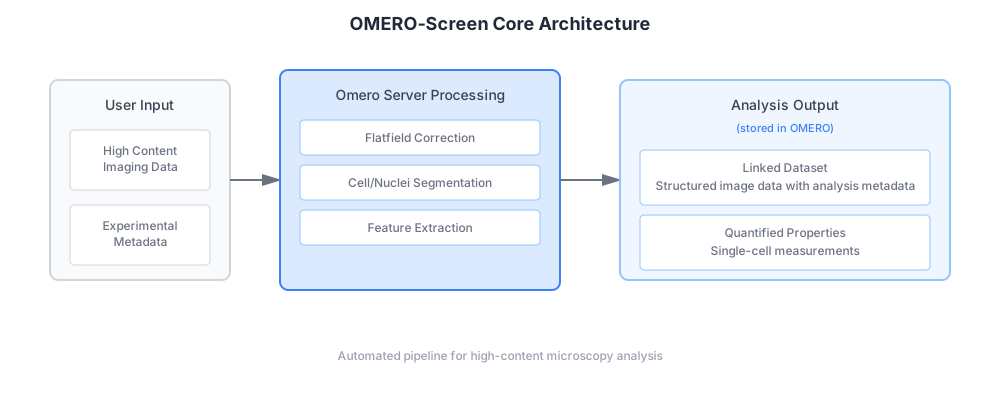
Technical Foundation
- • Built on OMERO image management platform
- • Automated workflow orchestration
- • Integrated metadata tracking
- • Python-based analysis framework
- • Segmentation with Cellpose models
- • Cell tracking with Mastodon and Trackastra
Research Applications
- • High-content drug screening
- • Single-cell phenotyping
- • Time-lapse cell tracking
- • Multiplexed immunofluorescence
- • Quantitative image analysis
Example: High-Content Ploidy Analysis
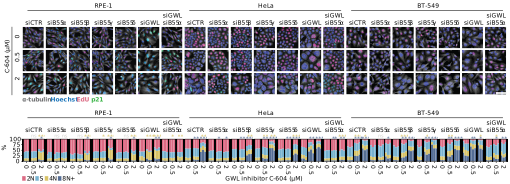
OMERO-Screen enables comprehensive analysis workflows for diverse biological questions. This example demonstrates high-content ploidy analysis, where single-cell segmentation, feature extraction, and quantitative measurements are automatically integrated to identify and characterize cells with different DNA content levels. Data from Zach et al. 2025.
Tool Integration & Ecosystem
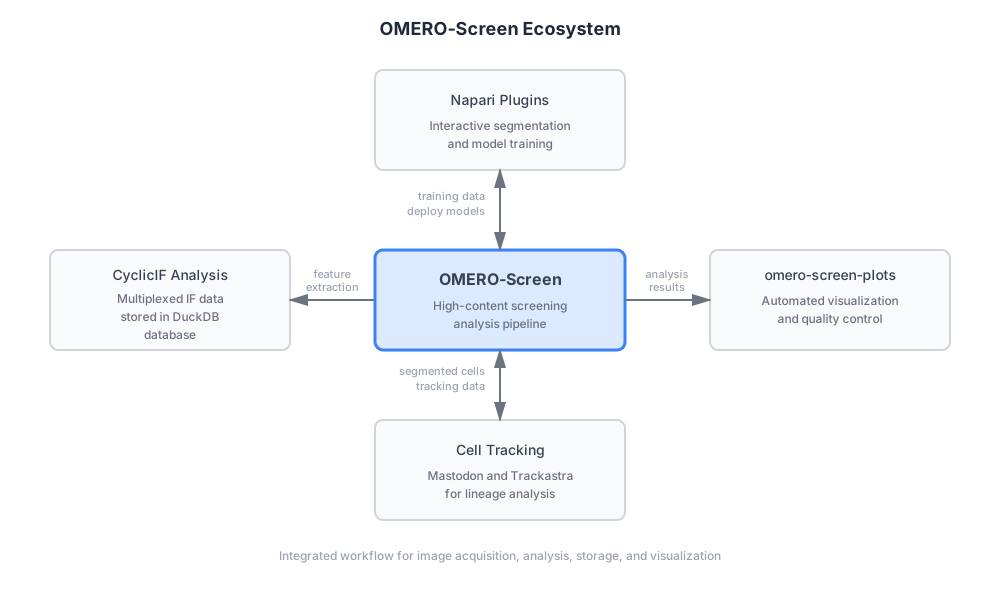
OMERO-Screen integrates with a rich ecosystem of computational tools and frameworks, enabling flexible analysis workflows that leverage best-in-class methods for image processing, machine learning, and data visualization. This modular approach allows researchers to incorporate new tools as they emerge while maintaining consistent data management practices.
Open Source & Community
OMERO-Screen is developed as an open-source project, allowing researchers to adapt and extend the pipeline for their specific needs. By building on the established OMERO platform, we ensure compatibility with existing infrastructure while adding specialized capabilities for high-throughput analysis.
OMERO-Screen is currently in alpha stage of development and is being tested in the lab and as part of collaborations. We will finalize a beta version and publish in early 2026.